
A Personal Account
I Found Out Something Embarrassingly Simple After I Had Almost Stopped Trying
After years of turning every bad day into another problem to solve, I started looking at comfort differently.
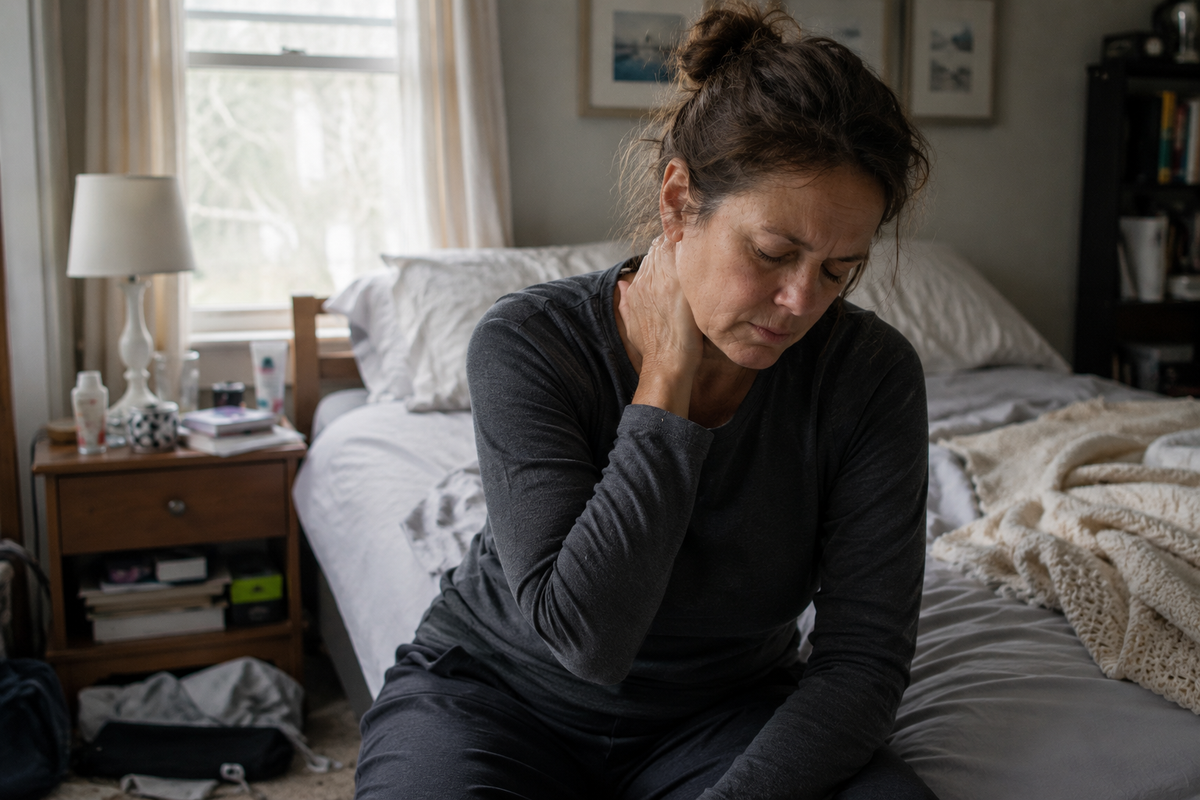
The Part I Didn't Like Admitting
My hygiene got bad. That was the sentence I kept trying to walk around. I could talk about the pain. I could talk about waking up over and over, not sitting long enough to read, and how getting dressed had started feeling like too much work.
Those things were easier to explain.
What I hated admitting was what I started saying to myself because of them.
I would see the house getting dusty after another day where I had done less than I wanted, and I would tell myself to stop with the pity party.
Other people dealt with hard things.
I should be able to get up. Get dressed. Do what needed doing.
When I could not, I treated it like evidence against myself.
Some days I stopped caring about getting dressed because it felt like too much effort. Then I judged myself for not caring.
The whole thing became circular.
Pain made ordinary things harder. Then I blamed myself for letting ordinary things get hard.
A bad day stopped being only a bad day.
It started feeling like proof that I had failed at something I had been trying very hard to do right.
I had put in the hours. I had kept appointments. I had done exercises even when I was tired of thinking about my back.
So when ordinary things still felt hard, I did not know where else to put the blame.
I put it on myself.
Eventually I realized I was exhausted from more than the discomfort.
I was exhausted from grading myself all day.
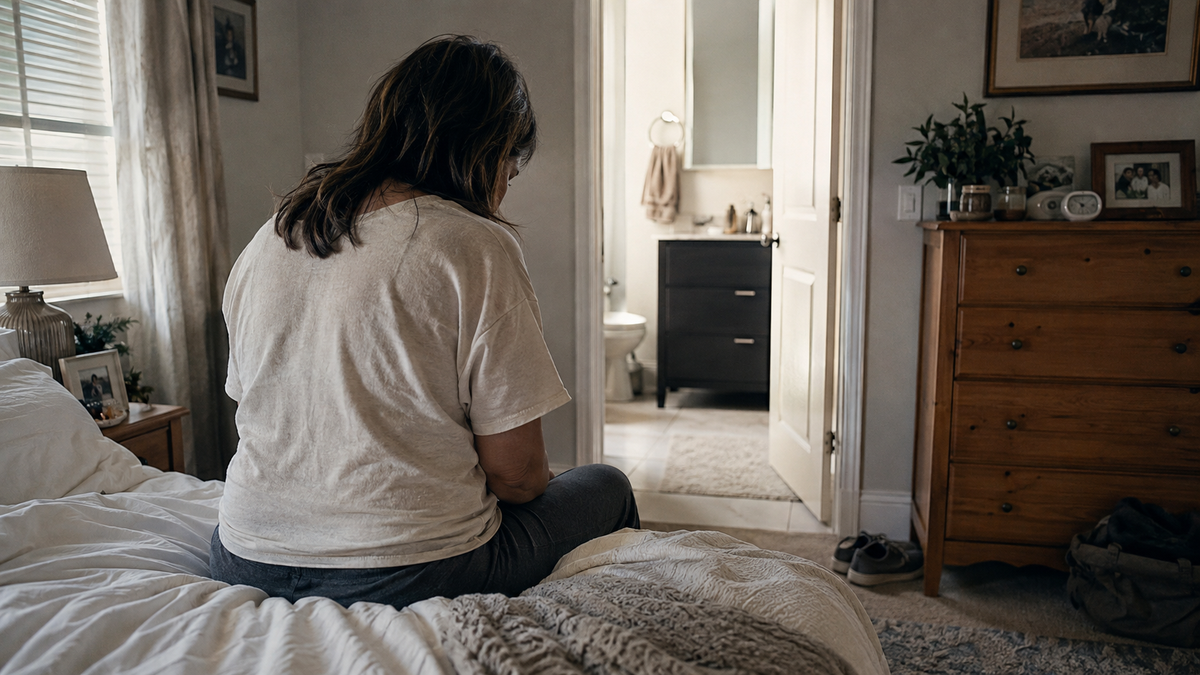
My Back Had Started Running My Day
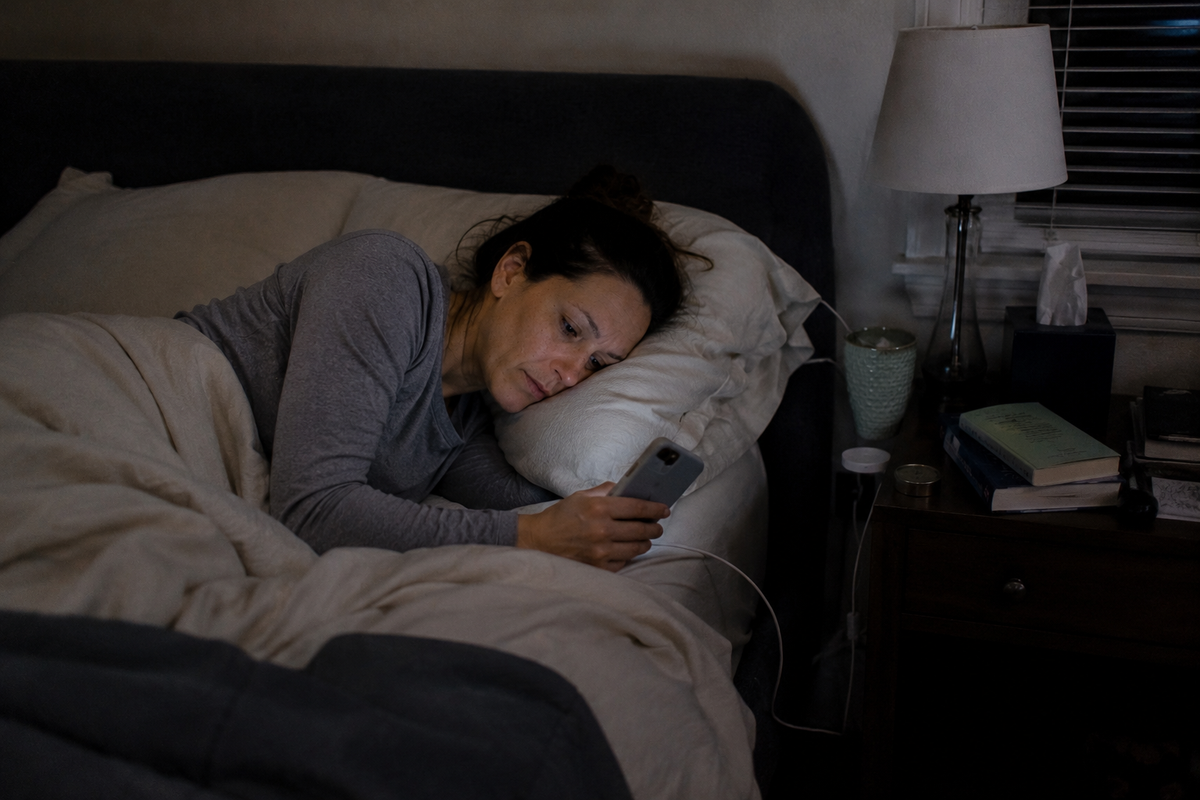
There were mornings when I stayed in bed because I knew the pain was waiting for me.
Delaying getting up never fixed anything, but for a few minutes I could pretend I did not have to deal with it yet.
Once I stood, even getting dressed could feel like work.
Some days walking from one room to another was enough to make me think carefully about what else I wanted to ask from myself.
At night, I shifted around trying to find a position that felt comfortable, then moved again when it stopped feeling that way.
The lack of rest made everything smaller.
Reading took more effort. Sitting long enough to focus took more effort. Work took more effort.
And sometimes one painful spot could become the only thing I could think about.
That was what made the problem feel so unrelenting.
Even on days I could tolerate it, it still occupied space in my head.
I started arranging normal life around what I thought I could handle.
Walking and a little light yardwork could be enough. If I did too much, I worried about whether the next day would be spent recovering.
If I had a better day, I wanted to believe I was turning a corner.
Then another bad day came and I felt crushed again.
After enough of that, I stopped trusting the good days.
I also started doing the math around work.
If sitting and concentrating were already difficult, how long could I keep pretending nothing had changed?
That question stayed with me.
At first I was angry.
Later I was mostly tired.
Not the kind of tired that disappeared after sleeping in.
Mentally exhausted.
I was tired of checking how I felt. Tired of planning around it. Tired of hoping one decent evening meant I was getting somewhere.
Most of all, I was tired of giving my back so much of my attention.
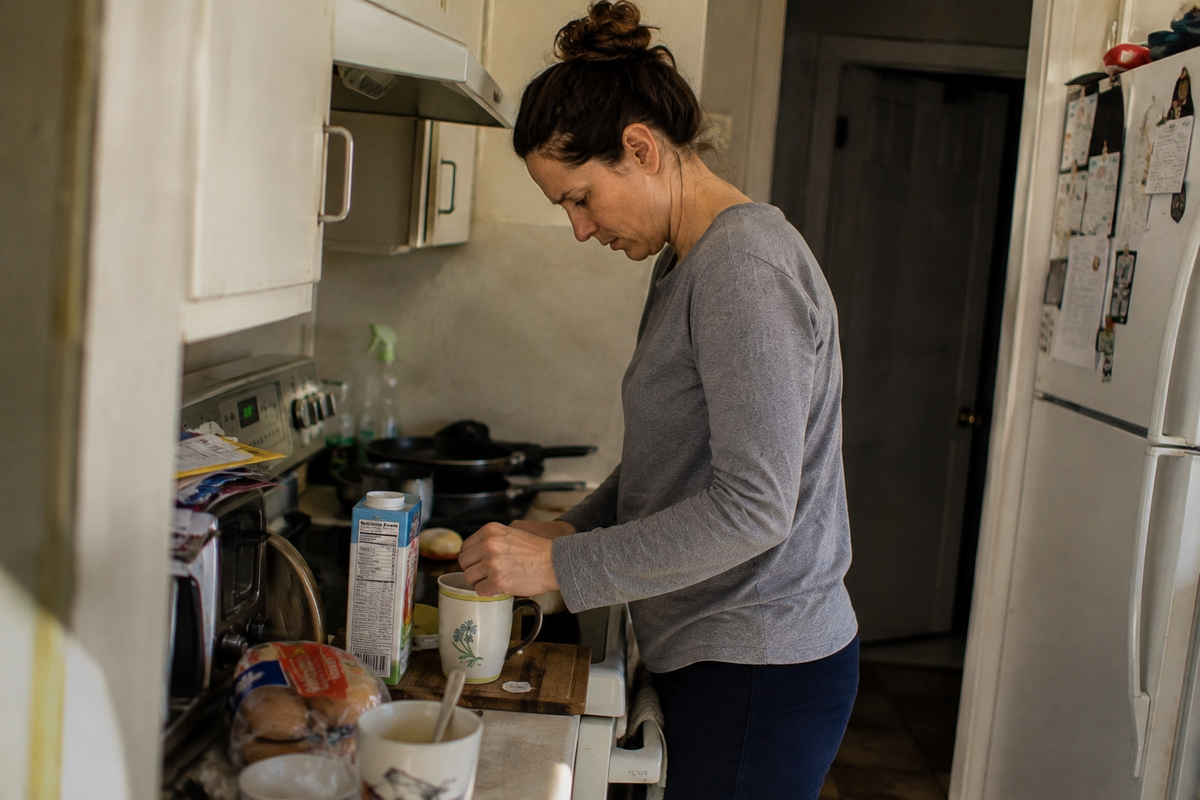
I Had Already Tried Hard Enough
I had already tried hard enough.
That was the part I had to keep reminding myself of.
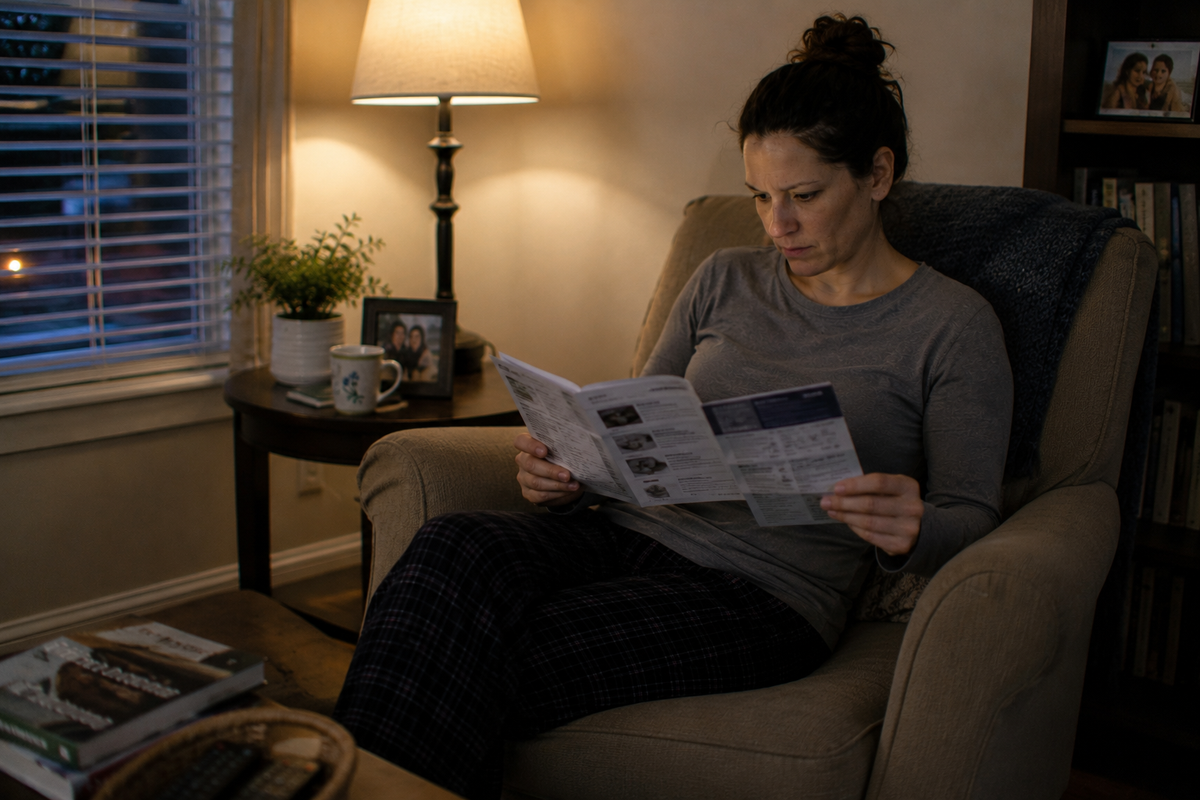
For years I had seen physical therapists and chiropractors. I did the exercises. I kept appointments. I put in the hours.
There were times I thought I was making progress.
Then I would sit too long or have a bad day and it felt like all of it disappeared again.
One physical therapist even gave me exercises that made things worse.
I still kept thinking the answer had to be more effort.
More consistency. Better form. More patience.
That was the trap I kept falling into.
If I was still struggling, then maybe I had not done enough yet.
But I knew how much time I had put into it.
I knew how many appointments I had gone to.
I knew how often I had tried to follow instructions even when I was tired of thinking about my back.
Medication had its own place in the story too.
So did the bigger decisions.
I had gone through a fusion and still had pain afterward.
That changed something in me.
Once I had been through something that serious and still found myself dealing with the same problem, I became much more careful about what I expected from anything that came next.
I stopped wanting another huge explanation.
I stopped wanting another thing presented to me like it was going to settle the whole problem.
There were days when "nothing helps and I don't know what to do anymore" felt less like something dramatic and more like a plain description of where I was.
That did not mean the therapy had been pointless.
It did not mean medication had no place.
It did not mean every treatment had failed in the same way.
It meant I was tired of asking every new thing to carry more weight than it could.
I had spent years treating my back like a problem I had to solve perfectly.
Every appointment became part of the project.
Every exercise became part of the project.
Every good day became a test.
Every bad day became a verdict.
Eventually I had to admit something that was hard for me to accept.
I was not failing because I had not tried hard enough.
I had tried hard enough.
I was just exhausted from living as if I still had something to prove.
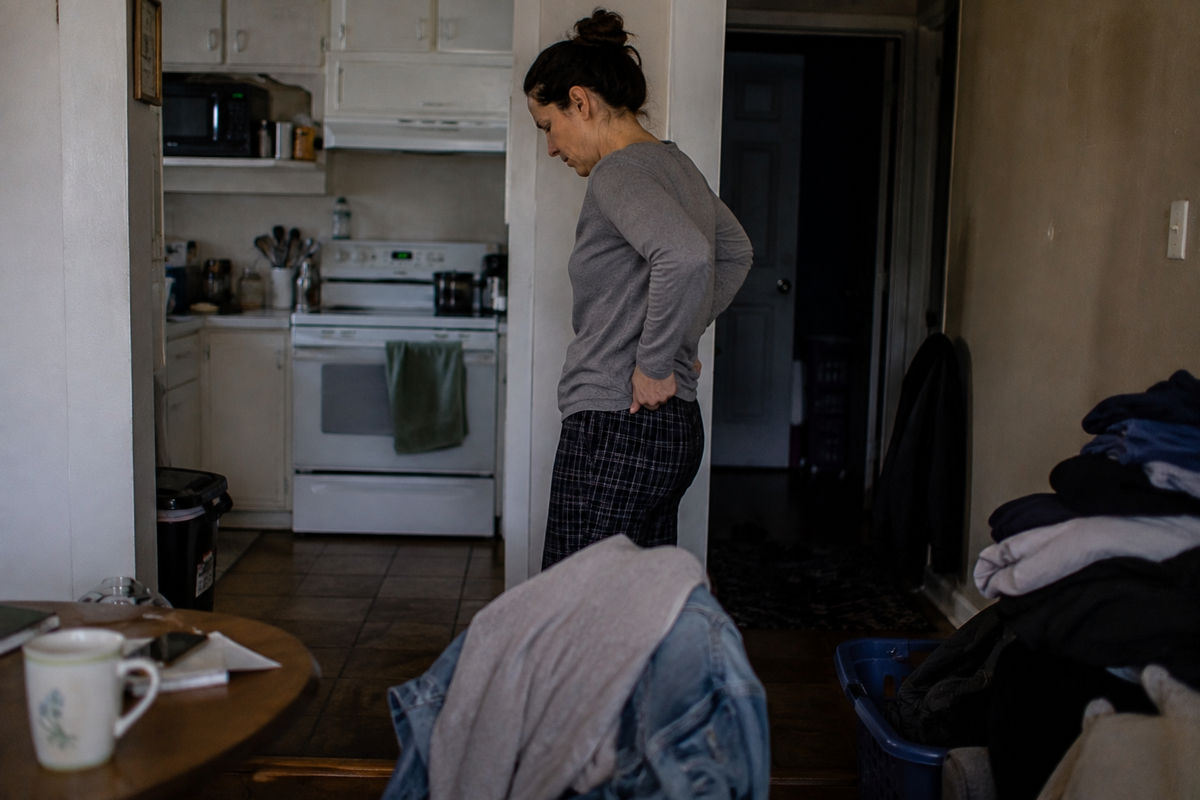
I Got Tired of Hoping
After a while, hope started to feel expensive.
Not because of the money.
Because of what happened in my head every time I let myself believe I might finally be getting somewhere.
A better day could make me hopeful.
Then a bad day came and I felt crushed again.
I had repeated that cycle enough times that I started protecting myself from the hopeful part.
I stopped wanting to hear that the next thing might be different.
I stopped looking for answers as often.
Even reading about back pain had started making me feel worse, not better.
Part of me would rather deal with what I already knew than get excited about something else and feel stupid afterward.
That was where I had ended up.
Not optimistic.
Not curious.
Just tired.
I had spent so long attaching an entire future to every attempt.
Would I be able to work normally again.
Would I stop arranging days around how I felt.
Would I get some version of my old life back.
Those questions made every new option feel heavier than it needed to be.
So I lowered the bar.
I stopped looking for something that had to mean everything.
I did not need another promise.
I did not need another plan that asked me to reorganize my life around it.
I wanted something simpler than that.
Something I could understand without having to believe a whole story first.
At the time, I did not realize that lowering the bar was what would make me notice the one idea I had somehow missed.
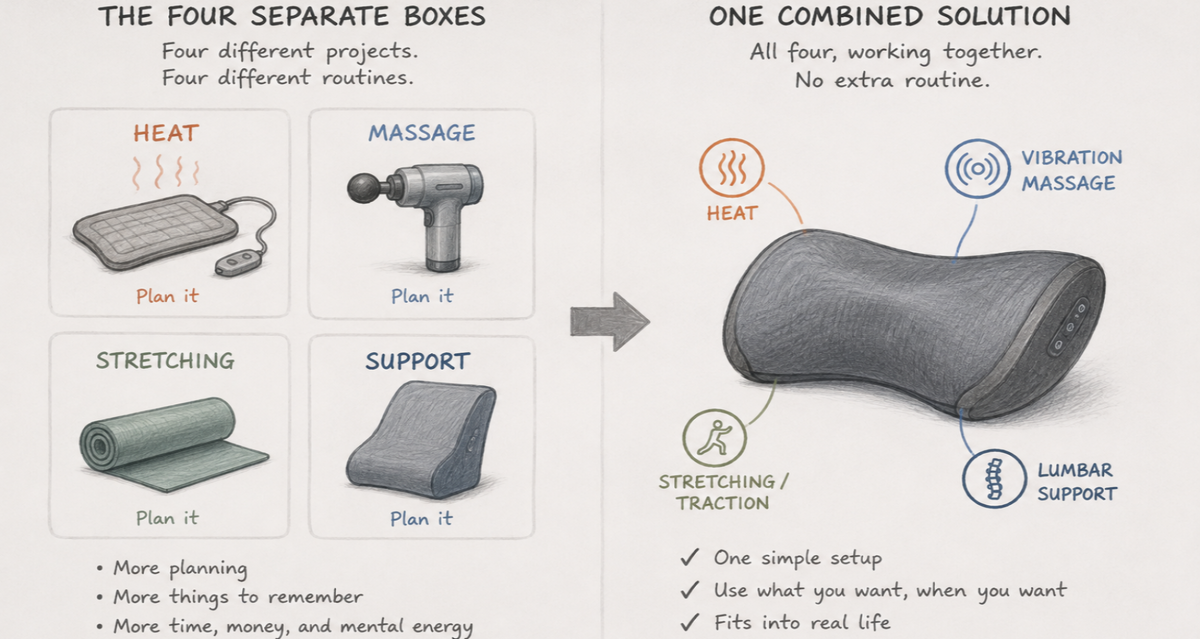
The Four Separate Boxes
The idea was embarrassingly simple.
Whenever I thought about comfort for my back, I had been putting everything into separate boxes.
I had treated them like completely different choices for so long that I had never stopped to ask why.
That question caught me at exactly the right time.
I was not looking for another explanation of my spine.
I was not trying to decide whether physical therapy had been right or wrong.
I was not trying to rewrite the decisions I had already made.
I was thinking about something much smaller.
Comfort.
Once I saw that pattern, I could not unsee it.
I had made the comfort side of my back feel like another collection of little projects.
Choose one thing.
See if it was enough.
Pay attention to every sensation.
Decide whether it was working.
Move on to something else.
That was exactly the kind of thinking I was tired of.
The thought that got through to me was not that I had finally found the answer.
It was almost the opposite.
Maybe I did not need one separate thing to be the answer.
Maybe heat, vibration, stretching, and lumbar support could simply exist together.
That did not make any of my previous choices foolish.
It did not make therapy pointless.
It did not make medication meaningless.
It did not turn surgery into something simple.
Those things had their own jobs and their own history.
This was about the part of the day when I was at home and wanted to get comfortable.
For once, the thought did not make me feel like I needed to try harder.
It made me realize I might have been making comfort more complicated than it needed to be.
That was a much easier idea to hold onto.
No giant promise.
No big theory.
Just four things I already understood, brought together instead of kept apart.
After everything else, that felt almost boring.
I had started to appreciate boring.
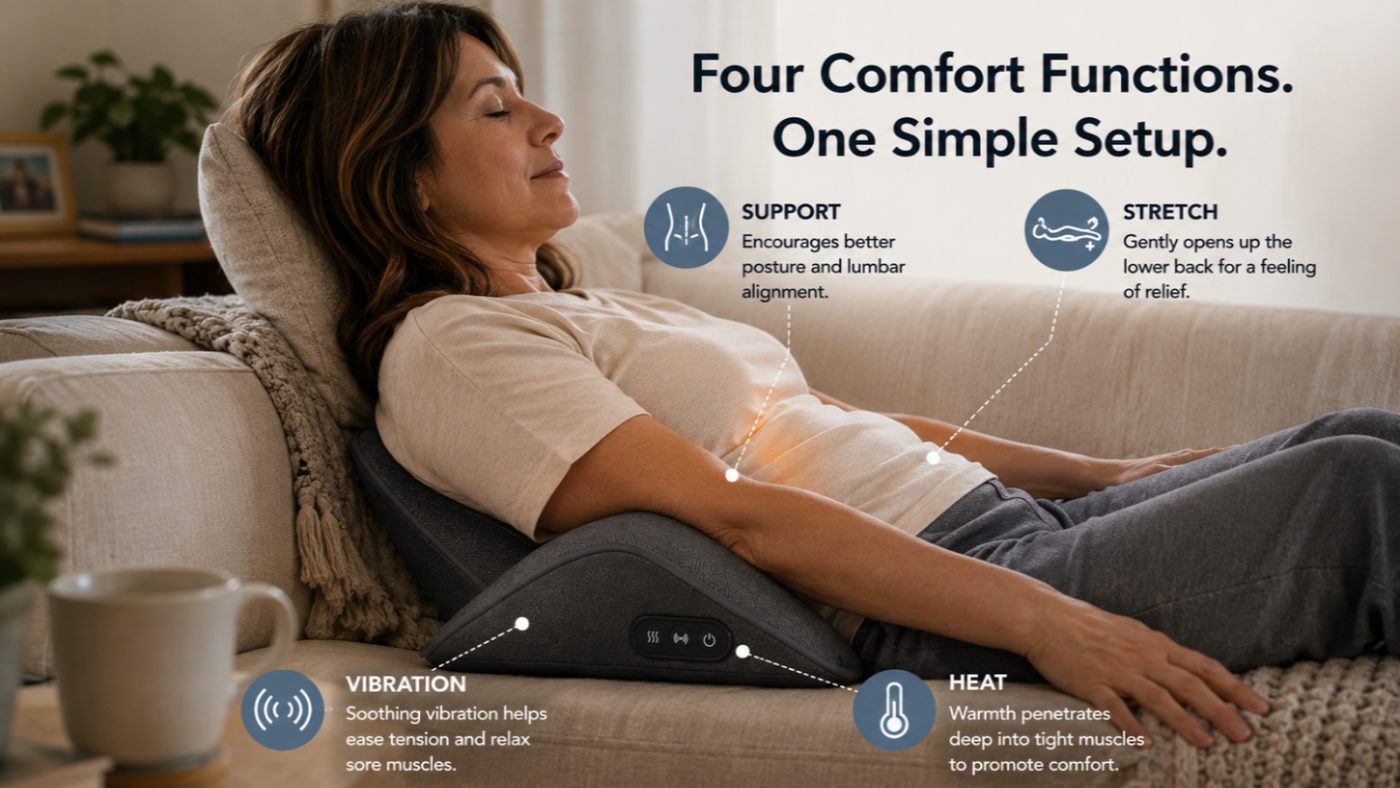
- Heat — Warmth when I wanted to settle down.
- Massage — Vibration when I wanted a soothing sensation.
- Stretching — A separate kind of comfort I sometimes wanted.
- Support — Something behind or beneath my lower back while sitting or lying down.
Why Was I Treating Comfort Like Four Different Projects?
Once I started looking at it that way, something else became obvious.
The problem was not that I had never heard of heat.
Of course I had.
I knew what warmth felt like.
I knew what massage felt like.
I knew what it was like to want support behind my lower back while I sat.
And I knew the feeling of wanting a gentle stretch after spending too long in one position.
None of those ideas were new.
What was new was refusing to make myself choose only one.
For years, I had treated comfort like a sequence.
Try the heat.
Then try something else.
Move around.
Adjust again.
Decide whether another option might feel better.
Even when I was supposed to be resting, I could turn the whole thing into work.
That was the part I wanted to stop.
I did not need every function every minute.
Some evenings I wanted warmth.
Sometimes I wanted vibration.
Sometimes support was the thing I noticed most.
Other times I wanted the stretching sensation.
What made sense to me was having those options available without building a separate routine around each one.
It sounds almost too obvious when I write it now.
At the time, it felt different because I had spent years thinking in categories.
Treatment was one category.
Medication was another.
Heat was another.
Massage was another.
Support was another.
Everything had its own box and its own expectations.
I had reached a point where I did not want more expectations.
I wanted fewer decisions.
That became the standard I used when I started looking again.
Not "Will this fix my back?"
I had stopped asking little things to answer questions that big.
The question was simpler.
Could I have the kinds of comfort I already understood in one setup, and use whichever part I wanted without turning the evening into another assignment?
That was the first search in a long time that did not feel like I was starting the whole process over again.
I knew exactly what I was looking for.
And I knew exactly what I was not willing to believe.
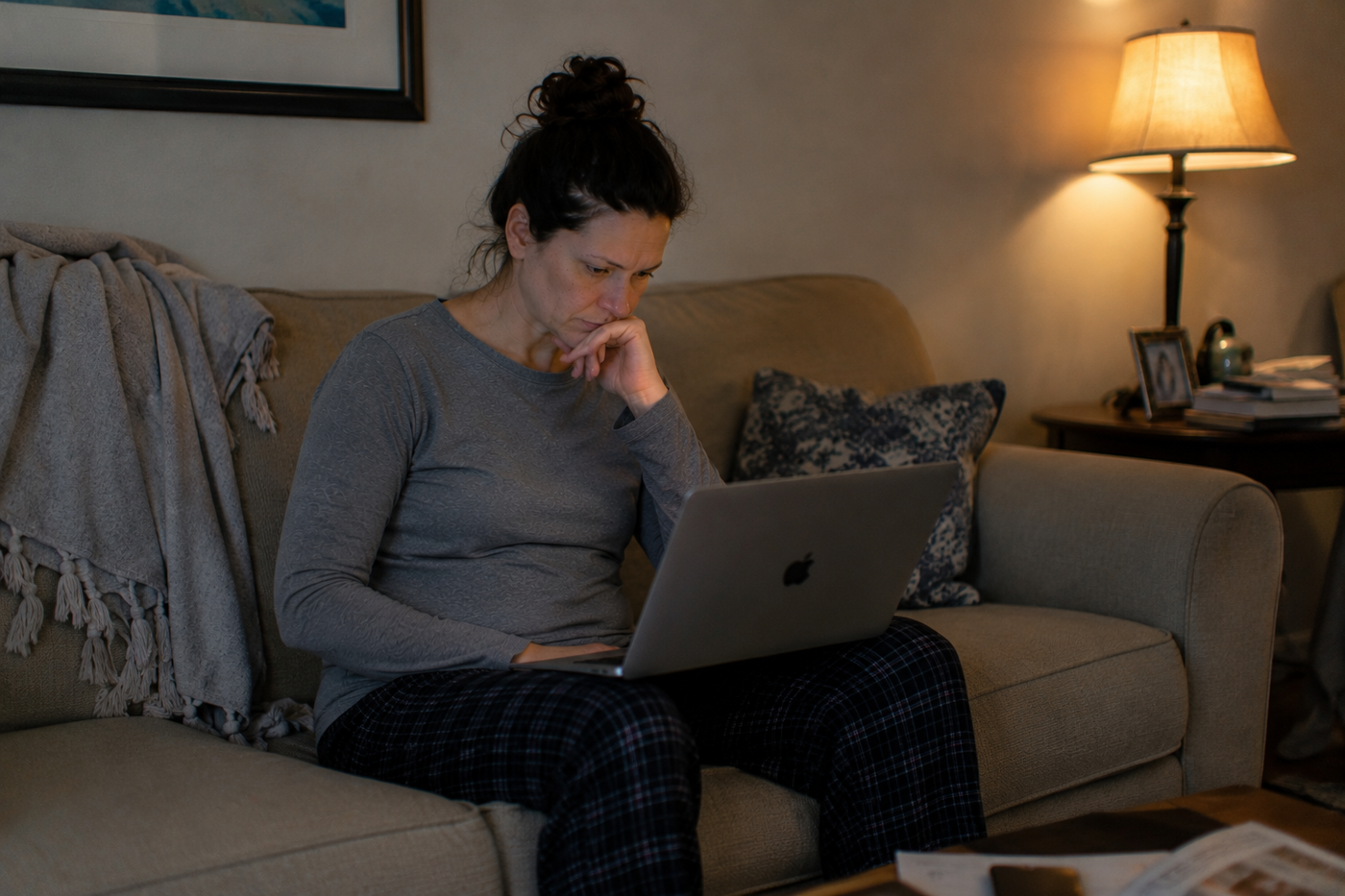
Another Back Product. I Nearly Closed the Page.
Once I knew what I was looking for, I started paying attention again.
Not much.
I still had very little patience for back product pages.
Most of them made me feel the same way before I had even finished reading.
Another promise.
Another explanation.
Another thing I could buy and regret.
So when another page caught my eye, my first reaction was basically no.
I nearly closed it.
By that point I had become suspicious of almost anything connected to backs.
I had heard enough big claims.
I had spent enough time wondering whether the next thing might finally be different.
What made me stay was not a dramatic promise.
It was the fact that the page seemed to be talking about comfort in the same simpler way I had just started thinking about it.
I still expected to be disappointed.
That part of me had not disappeared.
I read almost looking for the sentence that would ask me to believe too much.
I wanted people to say exactly what something was.
Nothing more.
If it was for comfort, call it comfort.
That had become my standard.
Accuracy.
Not optimism.
For the first time in a while, I kept reading without needing to imagine that whatever came next would change my entire life.
That was enough reason to stay on the page a little longer.
That's When I Found a Lumbar Pillow That Made Me Stop Scrolling
The page showed heat, vibration massage and physical stretching together, with the shape supporting the lower back.
I remember looking at it and thinking that this was basically the idea I had been trying to put into words.
Four separate boxes had become one thing.
I still expected to be disappointed.
That part of me had not disappeared.
But I was interested enough to try it without asking it to mean anything bigger than what it was.
The lumbar pillow I bought
WarmWave
30-day money-back guarantee · Free worldwide shipping
What It Actually Did
I kept reading because the setup was easy to understand.
The pillow combined the things I had been thinking about separately for years.
That was it.
I did not need a complicated explanation for why each one was there.
The part I liked was that I did not have to use everything at once.
I was not signing up for another program.
Some days I might want the heat.
Another day I might want the vibration.
Sometimes I wanted the stretching.
Other times I just wanted the pillow behind me while I sat.
For someone who had spent years turning everything involving my back into a project, that mattered.
It meant there was less to decide.
Less to prepare.
Less to evaluate.
That was also when I finally paid attention to the name on the page.
WarmWave.
I had almost missed it because I was much more interested in what the thing actually did than what it was called.
And that probably helped.
I had become very sensitive to products that needed a dramatic story before the product itself made sense.
WarmWave was easier for me to understand.
It was a lumbar pillow that put heat, vibration massage, stretching and support in the same place.
I could use it while lying down.
I could put it behind my lower back while sitting.
I could choose the functions I felt like using without needing a different product for each one.
That was the whole reason I ordered it.
Not because I believed I had found the answer to everything.
I had stopped looking for that.
I ordered it because the combination made sense to me, and because for once I did not feel like I had to believe anything bigger than what I could see.
- Heat — Warmth when I wanted to settle down.
- Vibration massage — A soothing vibration option when I wanted it.
- Stretching / traction — A built-in stretching function instead of another separate setup.
- Lumbar support — A contoured shape that sits behind or beneath the lower back.
Nothing Dramatic Happened
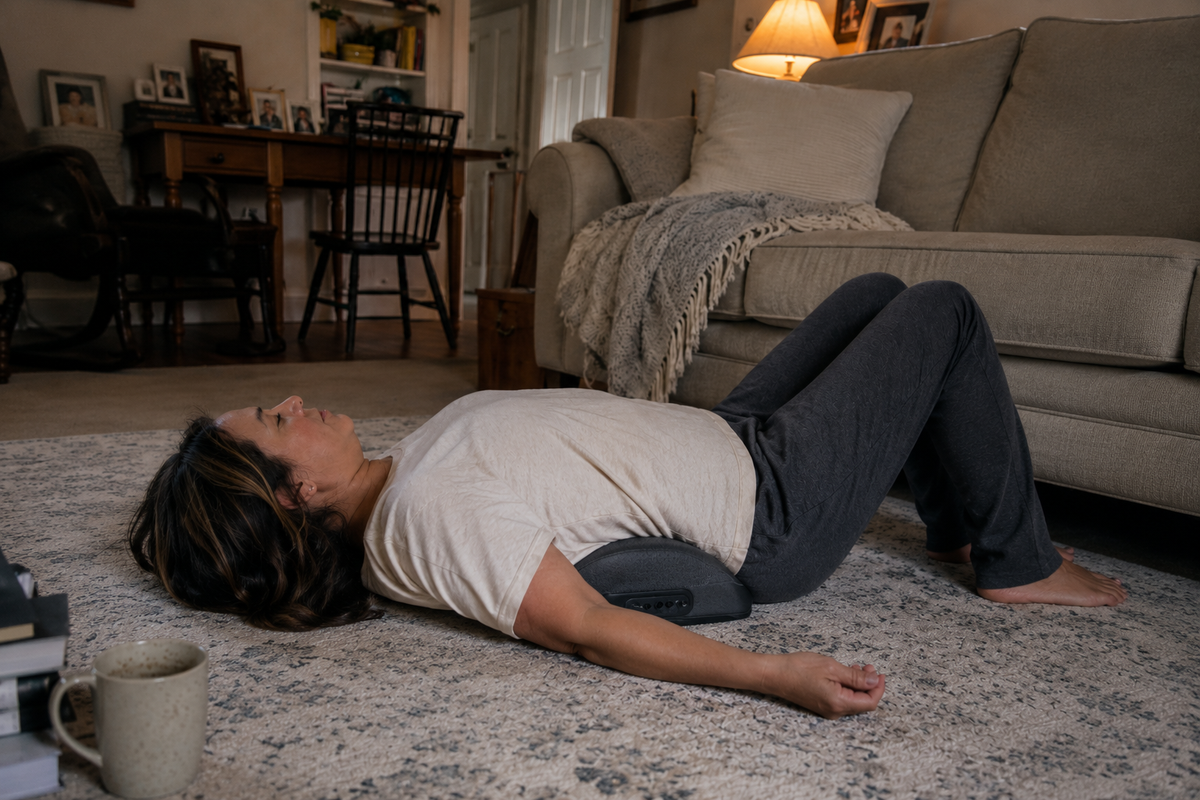
The first time I used it, I put the pillow under my lower back.
I turned on the heat and vibration and tried the stretching function.
Then I waited.
That had become automatic for me.
Whenever I tried something new, I watched myself closely.
Was this helping enough.
Was I doing it right.
Should I move.
Should I stay longer.
Was I about to decide I had wasted my time again.
I expected that same little argument to start in my head.
After a while, I noticed it had not.
I was just lying there.
I noticed the warmth.
I noticed the vibration.
I noticed the support beneath my lower back.
And for a while I had stopped shifting around trying to find another position.
Nothing dramatic happened.
I did not stand up and test myself.
I did not decide my back had changed.
I did not start making plans around what this might mean.
I had done enough of that.
I just felt comfortable enough to stay where I was.
That was the first thing I noticed.
And after spending so much time thinking about my back, there was something strangely quiet about not thinking about it for a while.
That was enough to make me use the pillow again.
Not because I suddenly believed something huge.
Because being comfortable for a while felt good.
For me, small was the point.
It Became Surprisingly Ordinary
So I used it again.
Then another time.
Some evenings I used the heat and vibration because I wanted to unwind.
Other times I used the stretching function.
When I sat at my desk, I liked having the lumbar support behind me.
The useful part was how ordinary it became.
I did not have to ask myself whether I was doing everything correctly.
I did not have a routine I had to complete.
I did not keep score.
If I wanted warmth, I used the heat.
If I wanted vibration, I used the vibration.
If I wanted the stretching function, it was there.
Sometimes I just wanted the support behind me while I sat.
That was enough.
I still had bad days.
I still noticed my back.
I still had moments where sitting felt harder than I wanted it to.
WarmWave did not erase any of that from my history.
What changed was much smaller.
I had one thing I could reach for when I wanted to get comfortable without turning comfort into another project.
At some point I noticed I was using it without asking myself whether it was "working" every single time.
I was not measuring the evening.
I was not trying to turn one comfortable stretch into proof of anything.
I just used it because I liked having the different functions together.
After years of making my back feel like work, that was probably the part I appreciated most.
This did not feel like more work.
What Made This Different for Me
The more I used WarmWave, the more I understood why the idea had caught my attention in the first place.
It was not because heat was new.
It was not because massage was new.
Support was not new either.
The difference was that I was no longer reaching for each one as a separate answer.
For years, that had been the pattern.
That probably sounds like a small inconvenience.
For me, it mattered because I was already tired of making decisions about my back.
I wanted fewer moving parts.
WarmWave was not automatically "better" than every separate product.
That was not how I thought about it.
It was simply more convenient for the way I wanted to use it.
One thing behind or beneath my lower back.
Heat when I wanted heat.
Vibration when I wanted vibration.
Stretching when I wanted stretching.
Support already there.
That simplicity became more valuable to me than I expected.
I had spent years trying to solve a complicated problem.
When I was finally trying to relax, I did not want relaxation itself to feel complicated too.
| Before | WarmWave | |
|---|---|---|
| Warmth | A separate heating product | Heat built into the same lumbar pillow |
| Massage | A separate massager | Vibration massage in the same device |
| Stretching | Another routine or separate approach | Built-in traction / stretching function |
| Lower-back support | A separate support pillow | Contoured lumbar shape |
| Setup | Decide which thing I wanted first | One portable device with simple controls |
Then I Started Reading What Other People Said
I had already bought mine, but eventually curiosity got the better of me.
I went back and started reading what other customers were saying.
That mattered to me because I did not want dramatic stories.
By then, dramatic stories were almost a reason for me not to believe something.
I wanted to see whether people were describing the same ordinary uses I had started noticing myself.
Sitting at a desk.
Driving.
Using the heat after work.
Putting it behind the lower back on the couch.
Taking it on a trip.
That was much closer to what I found.
What caught my attention was not the number by itself.
It was how specific some of the comments were.
One person talked about sitting at a desk for nine hours.
Another used it for highway driving.
Someone else mentioned using it quietly while on work calls.
One customer took it on a seven-hour flight.
Those details made more sense to me than another huge promise ever could.
They sounded like people fitting something into normal life.
That was what I had done too.
The Reviews That Sounded Most Familiar
I kept reading.
A few stood out because they were describing the product in almost the same restrained way I had learned to think about it.
Not a cure.
Not a dramatic before and after.
Something they used because it made a part of their day more comfortable.
Because by this stage I had stopped being impressed by what a back product promised to do.
I was much more interested in a different question.
Did people actually keep using it once the novelty wore off?
The reviews made it look like I was not the only one who had found a place for it in ordinary life.
And that made me trust my own experience a little more.
What I'd Tell Someone Who's Skeptical
Reading the reviews did not make me less skeptical.
If anything, I started looking for the small things that would make a product annoying enough to stop using.
I wondered whether the heat would barely feel warm, whether the massage would be too loud, whether the pillow would slide around, and whether the controls would turn something simple into another little project.
Those were the kinds of questions I trusted more than another dramatic promise.
That last part mattered to me.
Useful did not have to mean dramatic.
The product itself also used simple one-button controls, which fit the same idea.
Fewer decisions.
Less setup.
Use what I wanted and get on with the evening.
None of those details could tell someone else exactly how their back would feel.
I would not pretend they could.
I still had the same rule I had developed after everything else I tried.
Say exactly what the thing was.
WarmWave brought heat, vibration massage, traction or stretching, and lumbar support together in one portable pillow.
That was what I could judge it on.
Not whether it could erase years of history.
Not whether it could guarantee a certain result.
Just whether the functions were useful enough that I wanted to keep reaching for it.
For me, they were.
That was also why I did not need anyone else to believe my experience.
The product, the functions, and the reviews were there to look at.
The question was simply whether that combination made sense for the way someone actually wanted to use it.
That was how I had finally learned to look at back products.
Less hope.
More accuracy.
Will the heat actually feel warm?
Is the massage loud?
Will it slide around or look bulky?
Is it only for lying down?
Is it complicated?
I Didn't Have to Bet Everything on It
A guarantee did not prove the pillow would be right for everyone.
It did something simpler.
It kept the decision from needing to feel permanent.
The WarmWave page currently shows a 30-day money-back guarantee, along with fast and easy returns and free worldwide shipping.
I liked the logic of that more than another promise about what I was supposed to feel.
A return window could not tell me whether I would like the heat.
It could not tell me which setting I would use most.
It could not tell me whether the pillow would become part of my routine.
Those were things I only learned by using something.
What it could do was leave room for a simple decision afterward.
I could keep it if it earned a place.
I could return it if it did not.
That felt more reasonable to me than turning one purchase into another prediction about the rest of my life.
I had done enough of that.
WarmWave could simply be something I tried for comfort and judged on what it actually did when I used it.
No bigger meaning required.
That was the kind of risk reversal I could understand.
30-DAY
Try it, then decide
The decision does not need to feel permanent. Judge WarmWave on what it actually does when you use it.
I'm Not Asking You to Believe a Miracle Story
I almost did not write any of this.
I know how another back product story can sound when someone has already spent years hearing promises.
I would have rolled my eyes at it too.
That is probably why I am not interested in telling anyone that WarmWave is going to fix their back.
I cannot know that.
What I can say is much smaller.
I had spent years treating heat, massage, stretching, and support like separate choices.
Then I found a lumbar pillow that put those things together.
I tried it.
Nothing dramatic happened.
I noticed the warmth.
I noticed the vibration.
I noticed the support.
For a while, I stopped shifting around looking for another position.
Then I used it again.
Some evenings I wanted the heat and vibration.
Sometimes I wanted the stretching function.
Other times I just liked having the support behind me while I sat.
Eventually it became something I reached for without turning every use into a test.
That was the part I did not expect.
For years I had made nearly everything involving my back carry some larger question.
I kept wondering whether something was working, whether I was doing enough, and whether the next bad day would prove me wrong again.
WarmWave did not need to answer any of that for me.
It did not need to carry the weight of my entire back.
It could just be useful.
If any part of that sounds familiar, I left the WarmWave page below.
It shows the same pillow, the functions, the current offer, the customer reviews, and the return terms.
You do not have to take my word for anything.
Look at it for yourself.
If the combination makes sense for you, check the current offer.
If it does not, keep moving.
I almost did.
I am glad I did not.
WarmWave · 3-in-1 Lumbar Pillow
Heat · Vibration Massage · Stretching · Lumbar Support
30-day money-back guarantee · Free worldwide shipping
Advertorial Disclosure. This page is an advertisement for WarmWave. The narrator is a composite advertorial account created from supplied source material and customer feedback, not a single identified customer. Quoted customer reviews are drawn from the WarmWave product page. Individual experiences can vary. Nothing on this page should be read as medical advice or as a guaranteed result. Check the product page for current offer and return terms.